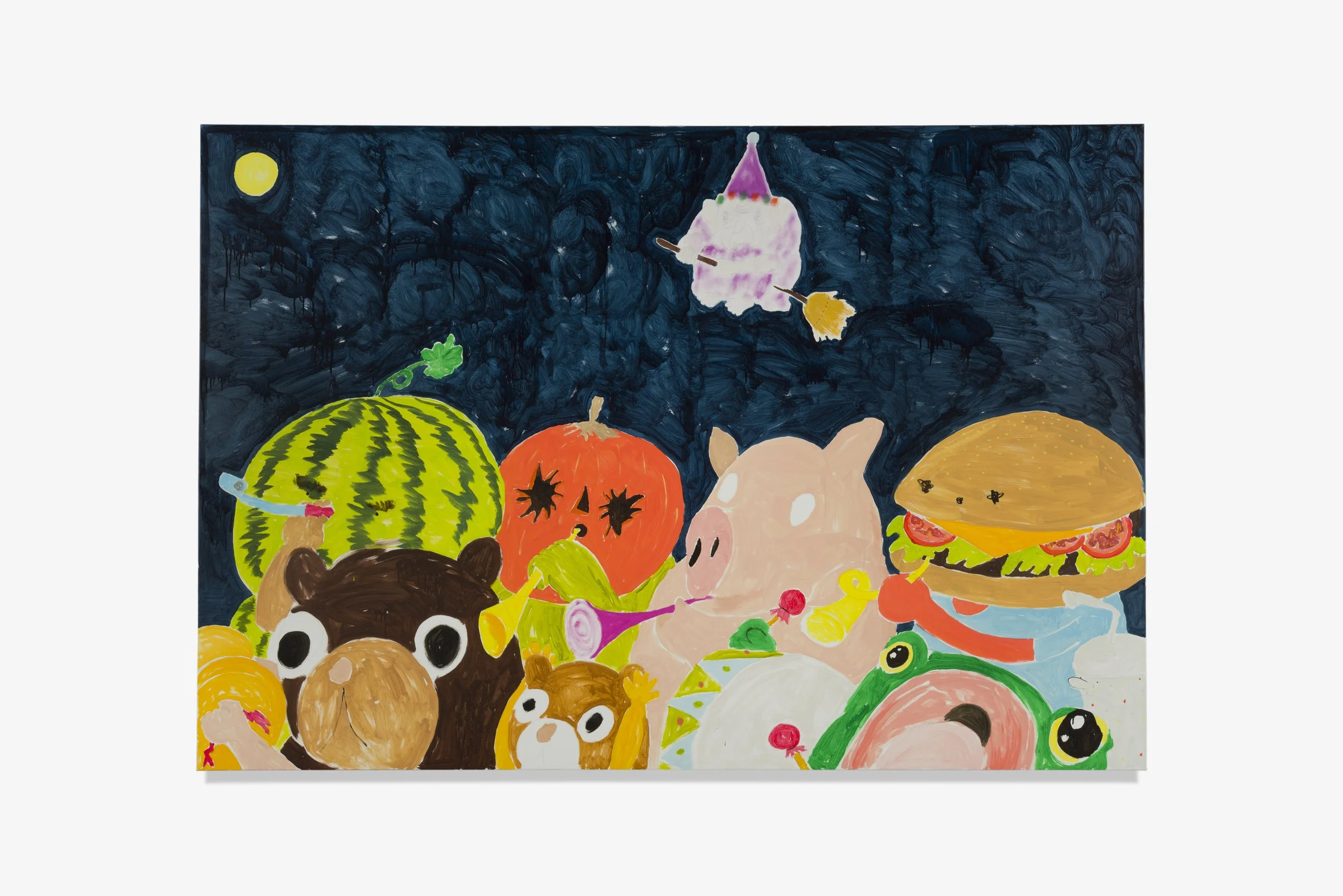
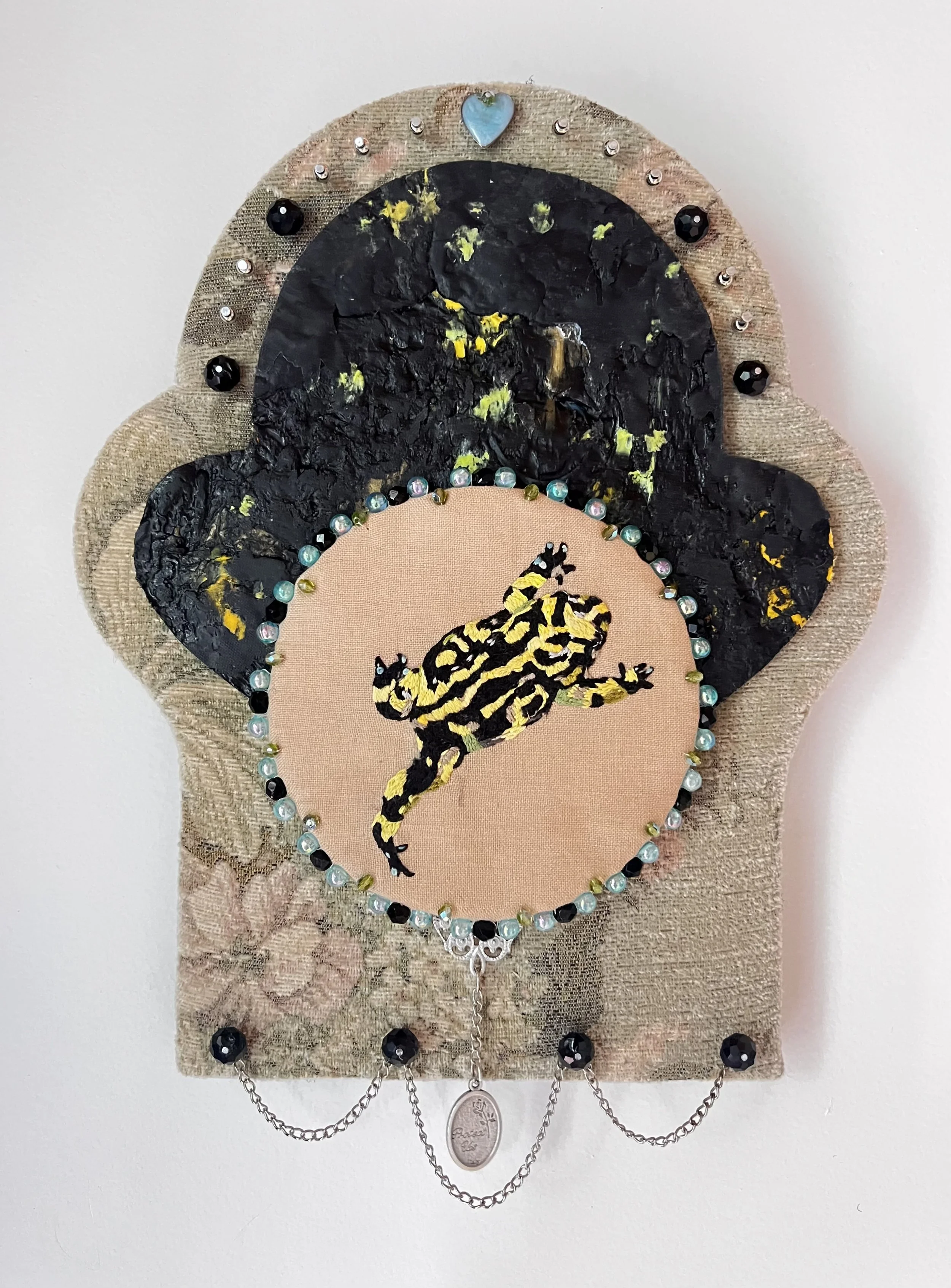
2026 Exhibition Program
Rosa Bassett
Everyday. Reverence
Like weather reports, sun hats, warm coats, bright twilight stars as you bring in damp washing to dry in front of the heater, Everyday. Reverence, brings together the textured life experiences, comprehensive skills and wonderful imaginings of these artists into tactile objects that share the continuation of the cycles of reflection and reintegration.
Everyday. Reverence, is an exhibition exploring meditation, care, and connection. Seven artists, all carers of overlapping hemispheres, are committed to the practice of intrinsic making and stewardship.
Through their practices they process and make meaning of the everyday; constantly re-weaving stories, histories and cultures. The time spent in dedicated making is both a quiet beacon in their lives and a testament to remaining steadfast to a creative core, necessary during times of uncertainty and chaos.
Everyday. Reverence is an exhibition that charts the artist's response to their role as steward, explorer and representatives of the far reaches of the principles of their art/craft practices. Familiar materials are reinvented. Their purpose, interrupted and made new.These actions result in objects that are containers for the fragile human body, holding us together and keeping it all in place. Wishes, kisses, tears, laughter and a yearning for care and calm beyond the fingertips of the making process.
It’s no surprise then that they each gravitate to these slow and careful practices, these everyday materials express the diverse routes and roots, exploring timeless practices which have nurtured life and connection across cultures and ages. Each artist acts with patience and care in their practice, grounding them to engage with reverence in the wider world.
Feels like End Times - But We're Still Printing
FIVE INK
Nicole Henry
Pamela Manning
Giancarlo Savaris
Ann Widdup
Claire Young
OPENING EVENT: 5 June 6–8pm
ON VIEW: 5–28 June
GALLERY HOURS: Fri–Sun 11–4pm
Feels like End Times - But We’re Still Printing showcases the reaction of the five Canberra printmakers of Five Ink to the chaotic world we live in today. On one hand that response is to protest or lament changes that feel like the end of times. It includes prints related to climate change, Antarctic warming, nuclear fears and cynicism about local politics. In this Five Ink draws on printmaking’s long history of engagement with politics and international events.
This exhibition celebrates the natural world and conveys the joy, humour and beauty of the everyday and the personal even in uncertain times. Elements such as repetitive marks, pop art humour, a certain surrealism, and layering of images combine to create patterns and prints relevant to the current moment, through screen printing, etching, photogravure and natural dye printing.
Five Ink use their experience and willingness to experiment with different printmaking techniques to find a fresh take on age-old issues such as war and human folly, with echoes of Magritte, Dadaism and the 1980s Canberra poster movement, while their positive images remain refreshingly grounded in the local and the now.
Nicole Henry, Pamela Manning, Giancarlo Savaris, Ann Widdup and Claire Young are the printmakers of Canberra group Five Ink. They have met over years to print together, sharing serious times and daily life events and discussing the world in the process. Their themes range through politics, memory and joy, while investigating the possibilities of printmaking.
Images:
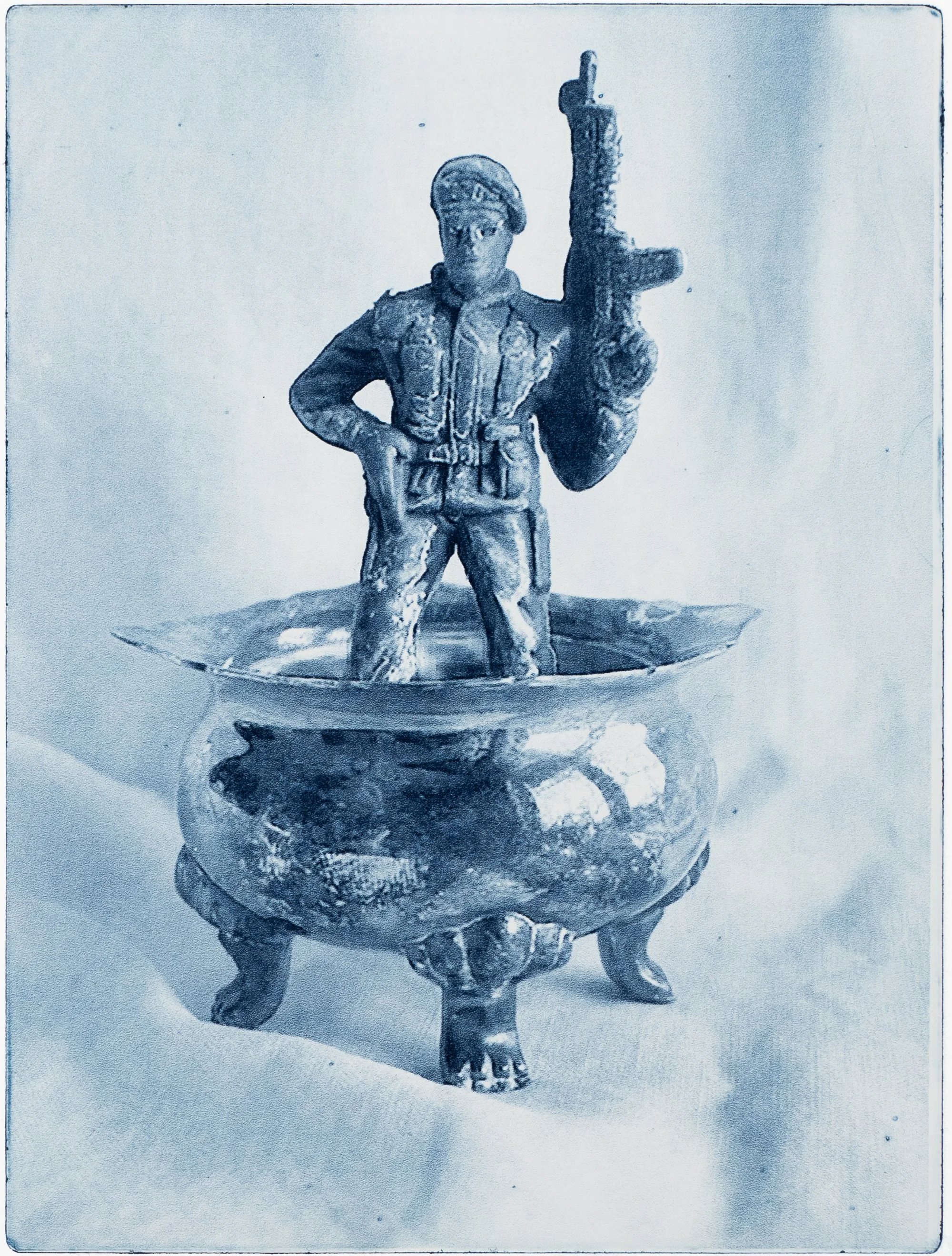
Nicole Henry, Silver Service Blue, 2025, Photogravure, 370x260mm. Image courtesy ANCA Gallery.
Never the Twain Shall Meet
Fatima Killeen
CRITICAL DATES
OPENING EVENT: 1 May 6–8pm
ON VIEW: 1–24 May
GALLERY HOURS: Fri–Sun 11–4pm
Western nations have always created industries for the benefit of their own economies. They continue to use harmful chemicals to grow toxic farm produce, invest in the production of weapons or actively dump piles of fast fashion throwaways into the landfill of developing countries under the name of “International aid relief”.
These practises create massive environmental devastation by leaving behind contaminated soil and waterways, as well as divided communities. Most of the people in these communities are engulfed in civil violence and economic uncertainty. They are left on their own to bear the brunt of conflict and have no basic human rights, nor the opportunities to make their lives better. They are also the ones who suffer the enormous effects of climate change and unbearable predicaments.
Unfortunately, from the western point-of-view, this is the price of progress at the mercy of powerful nations. Their addiction to profiteering hinders finding solutions to the decline of the environment - nature to them is a source to be exploited. The on-going campaigns of green washing manipulate people and stand in the way of any realistic resolve to adapt to the climate crisis and the looming danger we will face following the denial of our obligations to care for the environment.
Lands of countries in zones of conflict and overlong occupation have sadly become the testing ground for the paraphernalia of modern warfare leaving behind contaminated military landfill. The need to work collectively in facing up to the imminent crisis has become even more urgent. We need to co-exist and connect with nature in finding solutions to our environmental dilemma - we are part of the same organism that is breathing life into us.
Fatima Killeen was born in Casablanca and studied at Les Beaux Arts in Morocco and Corcoran School of Art in Washington DC. Killeen moved to Australia in 1994, undertaking a bachelor of Fine Arts at ANU in printmaking and drawing and graduated with First Class Honours in 1997.
Killeen was awarded the Wattan Art Prize at the Powerhouse Museum in Sydney (2001), National African Australian Award for Professional Excellence (2015&2016), International Honour Award for Moroccan Art & Culture (2017), Kenitra and the Australian Muslim Artists Art Prize (2021).
Image:
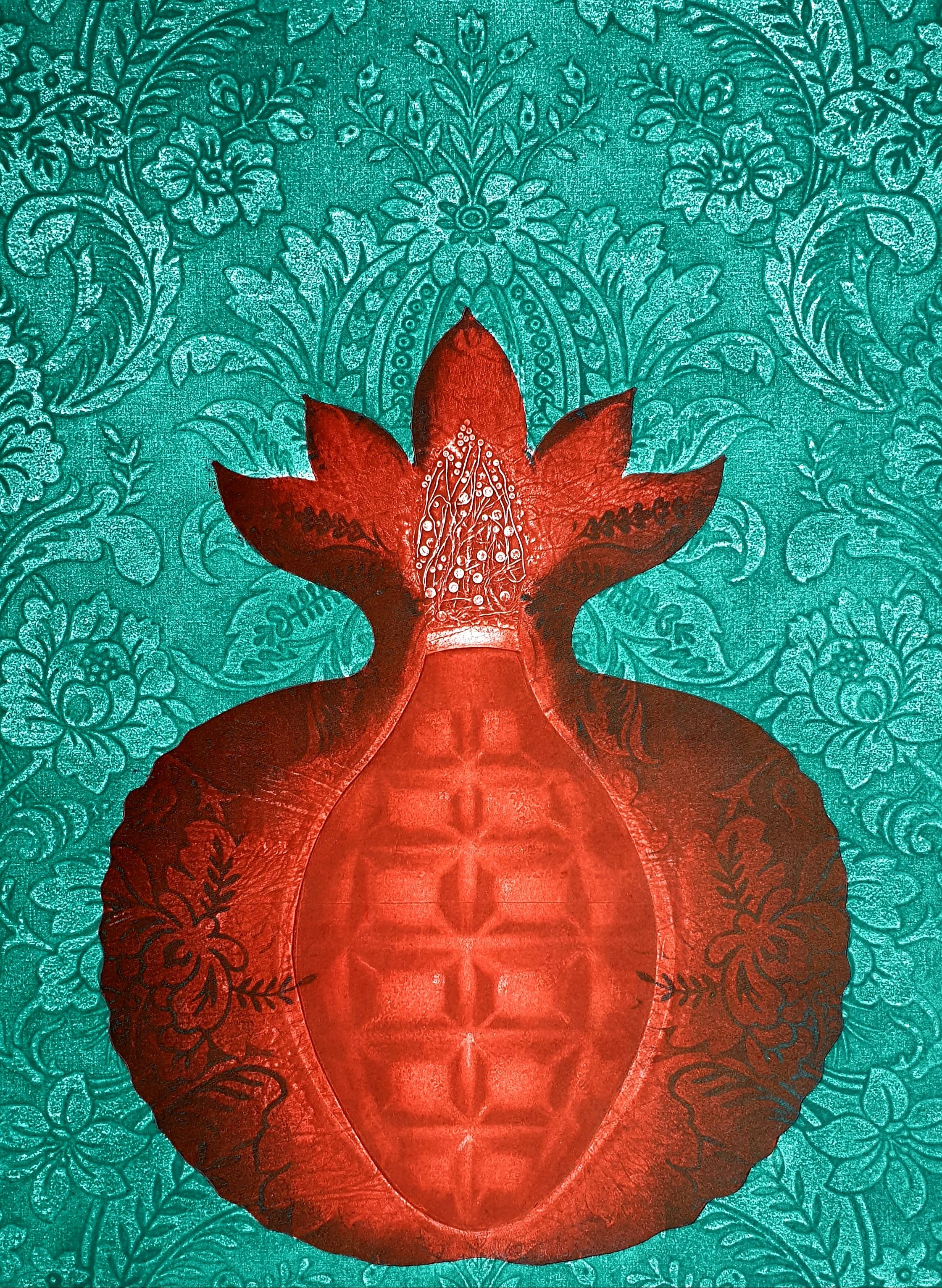
Fatima Killeen, We are what we grow, 2023, collograph on paper, 850x600mm
Soft Expose
Elesa Stellios
Emily Burgess-Orton
Janet Jeffs
Nina Casey-Brown
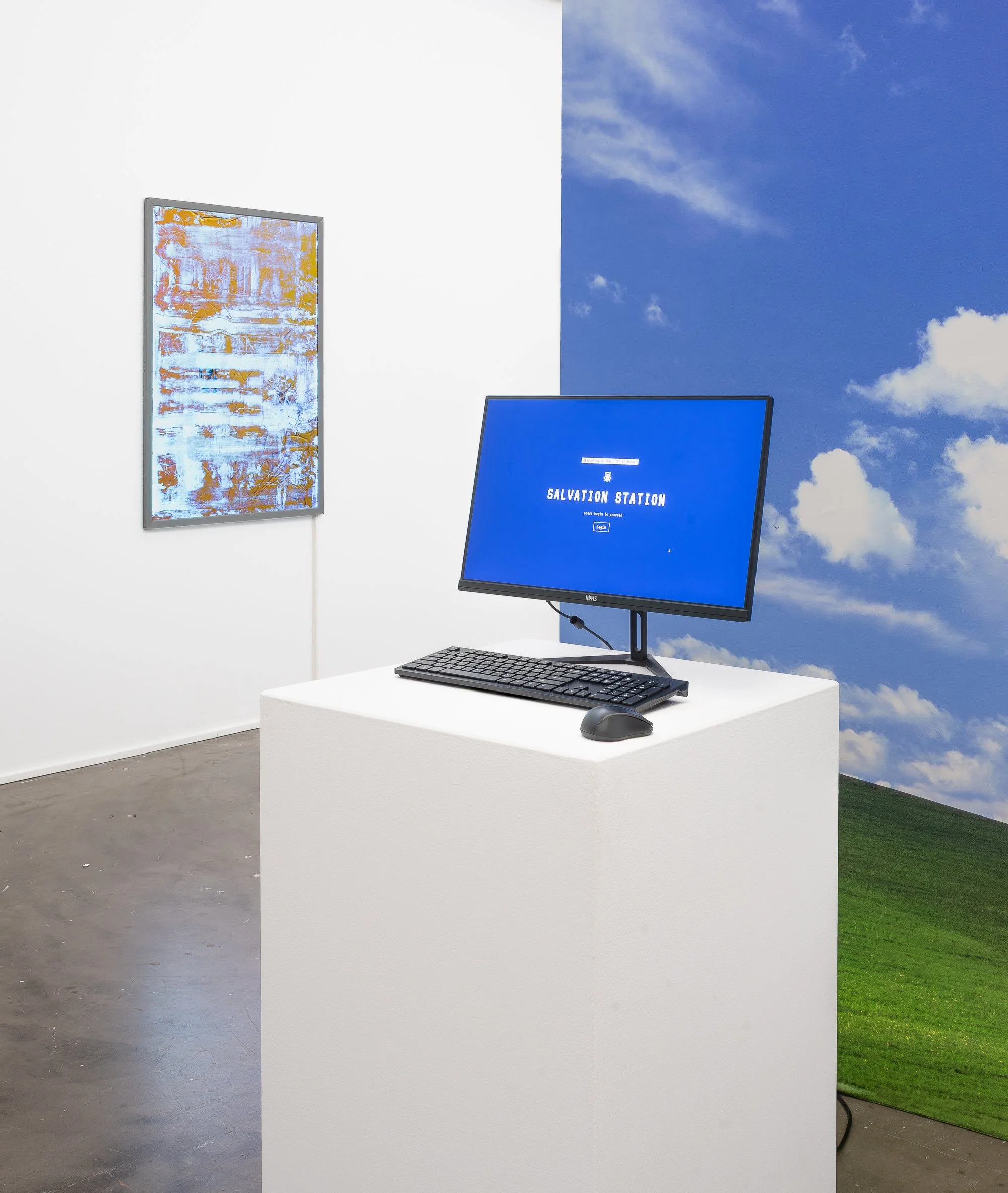
Soft Expose installation view, 2026, Image courtesy of ANCA gallery.
Critical dates
EXHIBITION OPENING: 10 APRIL 6–8pm
ON VIEW: 10-26 aPRIL
Gallery HOurs: fri–sun 11–4pm
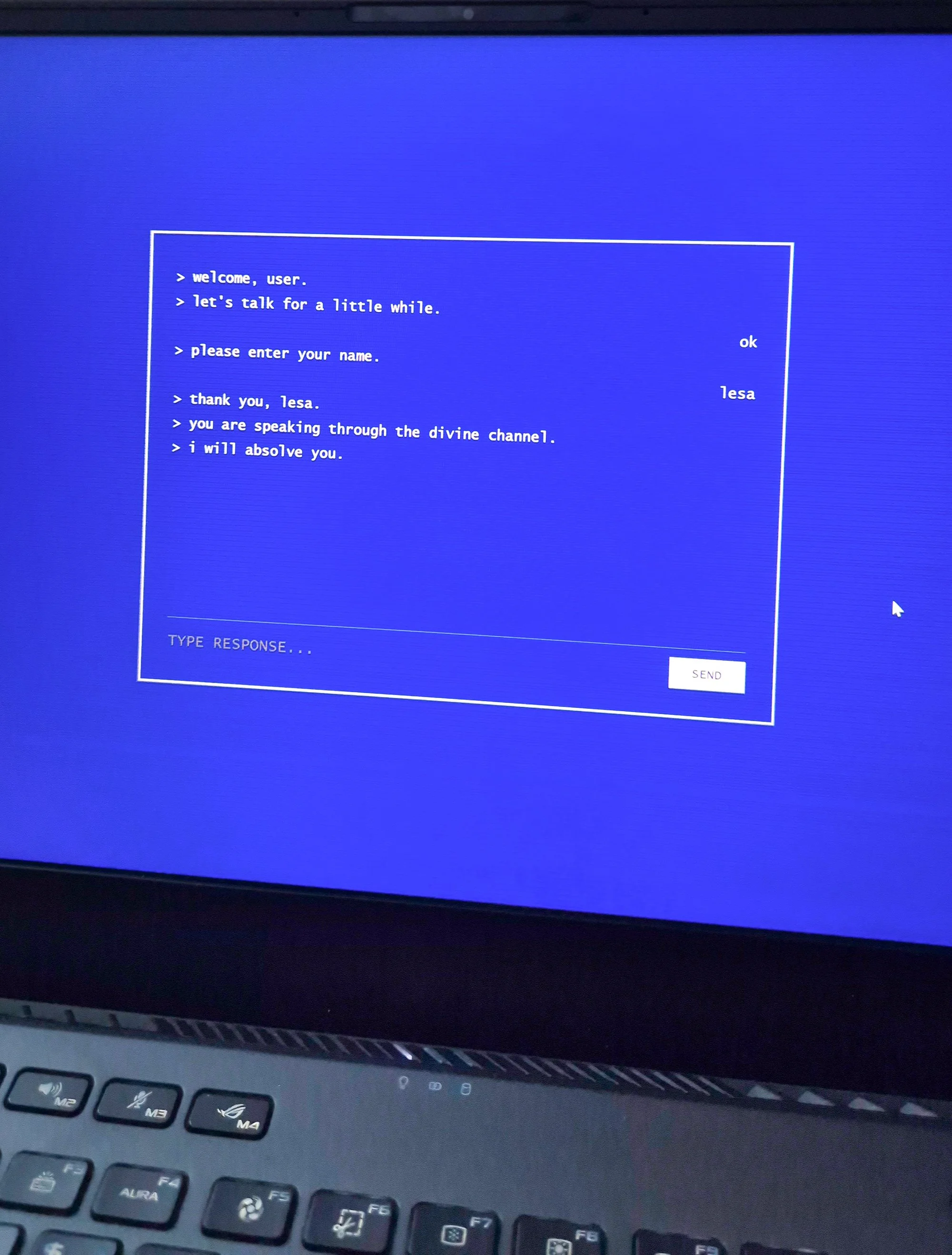
Soft Expose looks at the connections between the body, perception, the experience of the sublime and a speculative future saturated by new technologies. Bringing together the practices of Emily Burgess-Orton, Nina Casey-Brown, Janet Jeffs and Elesa Stellios, their work moves us between encounters with vulnerabilities, distortions of the self and imaginings of realities just beyond the horizon. These works also recognise the ambivalent nature of human experiences, offering cues for rest, interaction, pleasure and new forms of intimacy.
Working across ceramic, textile, glass, painting, installation and interactive media, each artist approaches perception differently. Emily Burgess-Orton’s large-scale ceramic forms rest within domestic settings, their creased and weighted surfaces tracing the contours of bodies that resist repair. Nina Casey-Brown’s hand-silvered and blown glass mirrors bend and blur the act of looking. Halos and repeated circular forms catch and release light, fragmenting the viewer and unsettling the promise of a perfect reflection. Janet Jeffs moves between iridescent membranes and heavily layered, rust-toned canvases. Light filters through translucent films and gestures across rough surfaces, creating atmospheres that oscillate between the ethereal and the grounded. In contrast, Elesa Stellios adopts the language of commercial services, inviting audiences to sit, watch, participate and buy in. Borrowing from the visual grammar of advertising and persuasion, her installation stages encounters with technologies that promise transcendence while quietly shaping how we see and are seen.
Together, the works do not offer clarity. Instead, they create spaces where perception is slowed and unsettled. Light glances from surface to surface, from glass to glaze, from screen to skin, drawing connections between material bodies and mediated futures. In this movement, exposure is not simply revelation. It is a condition of being present with distortion, with pleasure, and with the shifting boundaries between the intimate and the infinite.
These artists were chosen from the ANU School Art & Design 2025 Graduating Exhibition as part of the Emerging Artist Support Scheme (EASS).
Curated by Grace Blake and Julia Mendel.